
Sufjan Stevens: An Annotated Playlist

Sufjan Stevens is and will always be unapologetically himself. His genius ability to produce massive amounts of music that can make me cry while wanting to play them continuously on repeat is unmatched. An artist who is able to communicate grief and death through a medium so easily digestible by the world is talent that should not be underestimated. It is therapeutic for him to write about his sorrows and that is what makes it therapeutic for his audience as well.
Hooking his audience with a memoir to his home state, Michigan introduces the artists’ unique and personal set of struggles. Gaining millions more along the way through his exploration of genres and themes. And ultimately creating closure for himself and his audience through 2017’s Carrie and Lowell, a devotion to his alcoholic and schizophrenic mother who died in 2012. Stevens is one of, if not the, greatest song writer of this generation and someone that every person should get to know. I hope this playlist can give an overall summation of his seven-album, decade-and-a-half career, but to do that you’d have to listen to all he’s produced.
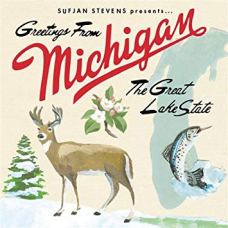
“Romulus” from Michigan, 2003
From Stevens’ debut album, Michigan, “Romulus” is an introduction to the honesty and pain you will hear in many of his songs, and the sadness you will probably feel yourself upon reflection of the lyrics. This shows how, from the very beginning, Stevens was somehow able pair impossibly deep themes with melodies that make the rawness bearable… and even enjoyable.
A common theme of his, this song focuses on his yearning for a relationship with his mother that becomes complicated by her mental illness. As a young boy he just wanted to be near her and “touch her hair”. But as he ages, he becomes “ashamed of her”. Shame and guilt are feelings which resurface throughout the rest of his albums.

“To Be Alone With You” from Seven Swans, 2004
Being a devout Christian, themes of God and religion show through in all of Stevens’s albums, but Seven Swans was his first where Christianity was the bloodline of the album as a whole.
It’s important to remember the power the listener has in creating meaning in songs. “To Be Alone With You” exemplifies how lyrics that are instinctively Christian in meaning can also be interpreting in a more secular way. Not being religious myself, I’d always interpreted this song as kind of a sweet, devoted romance. But in the end, we should appreciate this album for how important it was to Stevens and how passionately he feels about his beliefs, regardless of our own.

“Come On! Feel the Illinoise! Part I: The World’s Columbian Exposition Part II: Carl Sandburg Visits Me in A Dream” from Illinois, 2005
Sufjan boasts the talent of being able to play a ridiculous number of instruments. It was in this album where he took advantage of that talent and incorporated a variety of different sounds. He also loves the sound of a big band/orchestra/chorus and that is something fun we get on this album and this track in particular.
“Come On! Feel the Illinoise!” is a hilariously upbeat song about the Columbian Exposition famously held in Chicago in 1893, which debuted the Ferris wheel, something Stevens finds relevant enough to mention twice. And with an extended key change, it transitions to a story about Stevens dream in which Carl Sandburg, famous Chicago poet and writer, asks him “are you writing from the heart?” Causing him to reflect on his position in life, as some dreams may do.
“Chicago” from Illinois, 2005
A song realistically about Stevens leaving Chicago for New York and falling in love with the Big Apple. But which, for me, will always be the anthem of growing up in the Windy City.
“Casimir Pulaski Day” from Illinois, 2005
My Dad’s favorite Sufjan song, one he’s played on the guitar in my family room for a decade, and that I’ve always considered his saddest tune. From the fathers crying to the reference of cardinals as the narrator’s lover passes. Cardinals are known to visit those who’ve just had a loved one die, and my Grandpa visited my Mom in that form the day he died… if you believe in that sort of thing.
Upon reading an extremely detailed analysis of the song on TheWeeklings.com, I am absolutely wrecked by a song I already believed was devastating. I’ve found out the main character is not even a teenager and has lost the love of his life to bone cancer. I’ve found out that her father drives off a bridge while on the phone with the main character. And, cherry on top, she died on Casimir Pulaski Day, a day when the narrator will have to mourn her death while everyone else is celebrating a day off school or work. Jesus, Sufjan.
Sufjan is known to make spot on instrumental choices and “Casimir Pulaski Day” could be the best example of this. The melody, which starts off as acoustic guitar, but then transforms into a lonely trumpet before the sad story takes a turn for the worst. It’s genius.
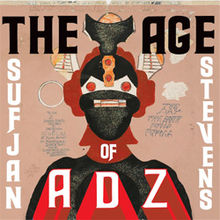
“Impossible Soul” from Age of Adz, 2010
You need this 25 minute, 34 second Sufjan masterpiece in your life. Blast it while you’re driving somewhere 26 minutes away. That would be satisfying.
Age of Adz shocked Sufjan’s audience. Away with banjos and acoustic guitars. Away with soft, sweet, sad vocals. In with autotune and hip hop. The world embraced this album with open arms once they got past being butt-hurt they didn’t get another Illinois.
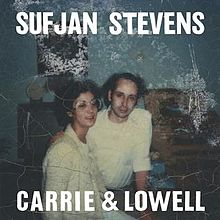
“Death With Dignity” from Carrie and Lowell
The song that made me fall in love with Sufjan the spring of my Senior year of High School and pretty much made me fall in love with music in general. The profoundness of the lyrics helped me face and semi-overcome my fear of death. This song begins an album entirely dedicated to his mother who abandoned him at age 5 and suffered from alcoholism and schizophrenia. A rough if not nonexistent relationship, he struggles to cope with her death, ultimately writing this album as a form of therapy.
What I find so special about this album is that it is so extremely personal. Completely context-based and distinctive devotions to his mother and step father become painstakingly real for his audience. While the lyrics are specific, the themes of death and loneliness and sadness are universal. The first verse addresses his fear of confronting a dying loved one, “Spirit of my silence I can hear you/ But I’m afraid to be near you/ And I don’t know where to begin.” He points out how uncomfortable it is for people to encounter death, especially when it becomes face to face with someone you love.
Finally, he is able to accept not only his mothers’ death but I believe death in general, “I forgive you, mother, I can hear you/ And I long to be near you/ But every road leads to an end.”
My favorite song of his and probably one of my top three favorite songs of all time.
“Pluto” from Planetarium, 2017
Sufjan’s most experimental album and most unique. A collaboration with Nico Muhly, extremely accomplished contemporary classical composer whose worked with artists like Bjork, Bryce Dessner, member of the band, The National, and drummer, James McAlister.
I can’t get on board with the whole album but am obsessed with a few tracks like “Neptune”, “Moon”, “Mercury” and the one I chose to showcase, “Pluto”. I think “Pluto” particularly emphasizes the techno/pop-py/orchestral flair that the album celebrates.
“A Little Lost”
Another one of Sufjan’s more electro songs, this cover of “A Little Lost” by famous cellist, Arthur Russell, is simply fantastic. In fact, I played it enough times in 2016 for it to make it on my “Top Songs of 2016” end-of-the-year playlist on Spotify (a great feature I might add).
Sufjan is quoted on Pitchfork about why he chose to cover this song: “it’s all about kissing. I love kissing. If I could kiss all day, I would. I can’t stop thinking about kissing. I like kissing more than sex because there’s no end to it. You can kiss forever. You can kiss yourself into oblivion.” Sufjan, The Romantic, at it again to melt our hearts.
“Mystery of Love” from Call Me By Your Name’ (Original Motion Picture Sountrack), 2017
Oh woe-oh-woah is me… Sufjan creates the perfect song to encapsulate all that is Call Me By Your Name.
Something he has dabbled in over the years, 2017 was a successful year in Sufjan’s soundtrack career. Writing not only this massively successful, Oscar-nominated track, but also songs for another best-picture nominee, I, Tonya. A decade ago, he did a cover of Bob Dylan’s “Ring Them Bells” for the icon’s biographical movie-musical. This is yet another genre that Stevens can check off on the ballot, not something all artists can say. While he has received some criticism over the years for following trends or for not creating album after album exactly like Illinois, I applaud him for his versatility. Go ahead, create folk! Create indie! Create Christian rock! Create electro! Create movie soundtracks! Because we all know he will crush anything he attempts.
Hopefully this playlist can do justice to the mastermind that is Sufjan Stevens. Someone who has conquered the genres of folk, indie, rock, electro, Christian rock, and soundtrack and, therefore, is difficult to narrow down to just ten songs. If you ever have the chance to see him perform live, he puts on an amazing show and you will see a totally different side of him than I could describe in these annotations. He is a performer and will never do the same thing twice. After falling in love with Carrie and Lowell in 2015, I saw him a year later at Pitchfork Music Festival. Expecting him to perform the album in a mellowed-out festival show, my presumptions were shattered by his colorful (literally and figuratively) stage presence and mostly electronic set. Instead of being upset I didn’t get to hear my favorite album, I was delighted by this surprising side of my beloved Sufjan. But I’m still waiting to hear him perform Carrie and Lowell…
 What's That Smell?